
Oil and acrylic paintings can both look striking at home. The better choice depends on the artwork itself, the room where it will hang, and how you want to live with it.
Oil is often associated with slow blending, layered surfaces, and visible brushwork. Acrylic can produce crisp shapes, thin washes, smooth color fields, or thick texture. Yet those descriptions are tendencies, not quality grades. An acrylic painting does not have to look flat, and an oil painting does not automatically look richer or last longer.
When comparing oil vs acrylic paintings, judge the finished work in front of you. Look at its palette, scale, sheen, texture, support, frame, care instructions, and seller terms. Those details will tell you more than the medium name alone.
Oil vs Acrylic Paintings at a Glance
The clearest difference starts with how the paint changes from wet to dry.
Oil paint cures through a reaction with oxygen. A surface may feel dry while deeper or thicker layers continue to cure. Acrylic paint forms a film as water leaves the paint and the polymer particles join. It usually reaches a dry surface faster, though thickness, additives, temperature, and humidity can change the timing for either medium.
| Buying question | Oil painting | Acrylic painting |
|---|---|---|
| How does it set? | Cures through oxidation and may remain in that process after the surface feels dry | Forms a paint film as water leaves the emulsion and usually dries faster at the surface |
| What can it look like? | Smooth, blended, layered, glazed, glossy, matte, or heavily textured | Smooth, crisp, washed, layered, glossy, matte, or heavily textured |
| What should you inspect? | Sheen, texture, paint thickness, support, readiness for packing, and care instructions | Dried color, sheen, texture, support, finish, and care instructions |
| Is it more durable? | Durability depends on the whole construction and its care | Durability depends on the whole construction and its care |
| Is it more expensive? | Medium alone does not set the price | Medium alone does not set the price |
| When might it suit you? | When you prefer a specific oil work and accept its display and care needs | When you prefer a specific acrylic work and accept its display and care needs |
This table is a starting point. Pigments, supports, finishes, artist technique, age, and room conditions can change how any individual painting looks and behaves.
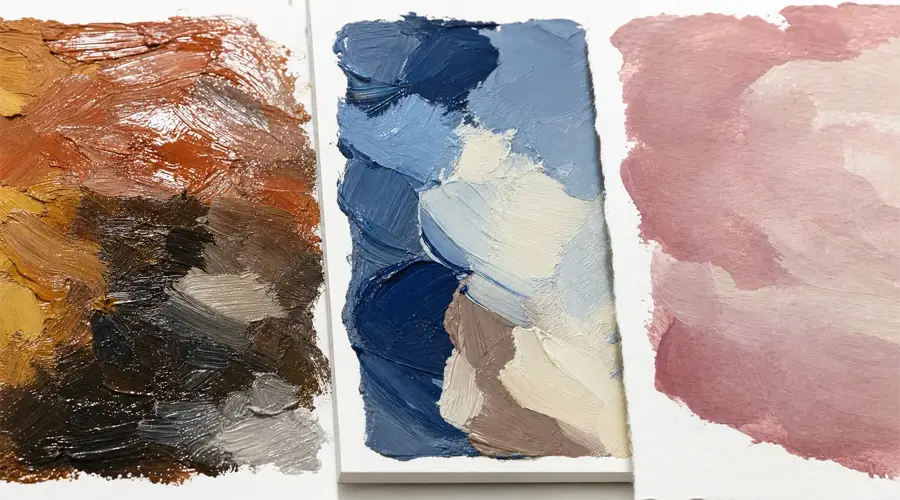
What Makes Oil and Acrylic Paintings Look Different?
The medium affects the artist’s working process, but it does not dictate one fixed appearance.
Oil stays workable longer than fast-drying acrylic under comparable studio conditions. That extra working time can help an artist soften edges, blend gradual color changes, or adjust wet layers. Acrylic sets more quickly, which supports crisp layering and faster changes between stages. Artists can also use acrylic additives to alter flow, sheen, drying behavior, and thickness.
Both media can carry visible brushwork and raised palette-knife marks. They can also look smooth. What you see depends on how the artist handled the paint, how thickly it was applied, and whether the surface has a matte, satin, or glossy finish.
Texture changes with the light
Raised paint catches light and casts small shadows. A textured painting may look calm in soft daylight and much more active under a spotlight. Glossy areas can create bright reflections, while rough or matte areas tend to scatter light.
This is why a straight-on product photo tells only part of the story. Before buying online, look for:
- A close-up of the paint surface.
- A side-angle photo that shows raised marks.
- A straight-on image for composition and color balance.
- Photos under daylight and interior lighting.
- An unedited photo when color accuracy matters.
Some acrylic colors can look different after the wet binder dries. The amount varies with the paint, pigment, thickness, and technique. Ask to see the finished, fully dried work rather than relying on an early studio preview.
Do not assume oil will always look deeper or that acrylic will always look flatter. Compare the actual surface and finish under lighting close to what you use at home.
Which Medium Works Better with Your Interior Style?
Choose the painting for the room before choosing it for the medium. Subject, color, scale, orientation, frame, and visual weight often have a stronger effect on room fit than the type of paint.
Start with five questions:
- What role should the painting play? It may be the main focal point, a quiet link between existing colors, or one part of a gallery wall.
- What is already in the room? Note the dominant colors, accent tones, wood or metal finishes, fabrics, patterns, and large furniture shapes.
- How much visual weight can the wall take? Thick texture, dark colors, a wide frame, and a large canvas can all make a work feel heavier.
- How will the room light hit it? Windows, ceiling lights, lamps, and spotlights can change color and reveal glare.
- Where will you view it from? A bold textured work may read well across a living room, while a smaller detailed piece may suit a closer viewing point.
Oil does not belong only in traditional rooms. Acrylic does not belong only in modern rooms. A spare room can carry a textured work if the palette and scale feel balanced. A layered room can hold a quiet, smooth painting if it gives the eye a place to rest.
Use style labels as search tools, then judge the work beside your actual furniture and finishes.
Durability, Care, and Room Conditions
Neither medium wins on durability by name alone. A painting is a system made from pigment, binder, ground, support, frame, surface finish, and sometimes varnish. Age, handling, light, heat, humidity changes, dust, and earlier repairs can affect its condition.
Oil paint may continue curing after it feels dry, especially when the paint is thick. Acrylic generally dries faster at the surface, but a thick or mixed-media work can still need special handling. Textured surfaces in either medium can collect dust and snag on cleaning materials.
For safer ownership:
- Follow the artist’s or seller’s care instructions for the specific work.
- Keep the painting away from direct sun unless its materials and display system are documented for that exposure.
- Avoid hanging it where heat, steam, grease, or large humidity changes are common.
- Handle the work by its rigid support or frame when the construction allows it. Do not press the painted surface.
- Use only the routine dusting method approved for that work.
- Do not apply water, household cleaners, solvents, or varnish without artwork-specific advice.
- Ask a qualified conservator about flaking paint, cracks, deep grime, stains, sagging canvas, or earlier repairs.
The safest cleaning method is often prevention. A stable indoor location, careful handling, and suitable framing reduce the need to touch the paint surface.
Price and Long-Term Value
The price of a painting can reflect many things besides the paint medium:
- The artist’s experience and market.
- Whether the work was individually conceived or painted from a repeatable design.
- Size and labor.
- Pigments, support, surface preparation, and other materials.
- Framing and hanging hardware.
- Documentation and provenance.
- Custom work or revisions.
- Packing, shipping, and return terms.
An oil painting may cost more than a nearby acrylic work, but that single comparison does not create a general rule. A large commissioned acrylic by a known artist may cost far more than a small workshop-produced oil painting.
Medium also does not prove authenticity or future value. A signature, textured surface, certificate, or seller statement can help with your review, but no single clue settles authorship or ownership history.
If documentation matters to you, keep the invoice, certificate, artist information, high-resolution photographs, condition notes, and seller messages. For a high-value or disputed purchase, seek independent professional advice.

When an Oil Painting May Be the Better Choice
Choose an oil painting when a particular oil work gives you the appearance you want and its ownership needs suit your home.
Oil may be a good fit if you prefer:
- Soft transitions or blended edges in the specific work.
- Layered or glazed passages.
- Pronounced brushwork or thick texture.
- A surface that changes visibly under directional light.
- A work whose artist, construction, and care information you can verify.
Before buying, ask whether the painting is ready to pack and hang. Confirm the support, frame, surface finish, care instructions, and expected fulfillment time. If the work is newly made or heavily textured, do not assume that a dry-feeling surface means every layer has completed its curing process.
Oil is not the better choice merely because it carries a premium image. Pick it because the actual painting works in your room and the care requirements fit your habits.
When an Acrylic Painting May Be the Better Choice
Choose an acrylic painting when the finished acrylic work gives you the palette, surface, and style you prefer.
Acrylic may be a good fit if you want:
- Crisp shapes or layered color areas.
- Thin washes, smooth fields, or mixed-media effects.
- Raised texture created with paint, gels, or other suitable materials.
- A work made on a shorter production schedule, subject to the seller’s real fulfillment time.
- A specific matte, satin, or glossy finish that works with your lighting.
Inspect the dried color and finished surface. Ask how the texture was made, what support sits beneath the paint, and what care method the artist recommends.
Do not choose acrylic only because you assume it will be cheaper, safer, easier to clean, or more durable. Those points depend on the exact materials and construction.
How to Choose a Painting for Your Home
The best painting medium for home decor is the one attached to a work that fits your wall, room, budget, and ownership needs. Use this checklist before you buy.
1. Measure the real display area
Measure the clear wall plus the furniture beneath it. Note doors, switches, vents, shelves, screens, and nearby frames. Check whether the listed dimensions refer to the painted image, canvas, frame, or full displayed footprint.
If you are buying a multi-panel work, include the planned gaps between panels. Mark the full size on the wall with painter’s tape or a paper template, then stand at your normal viewing distance.
2. Check color in your room
Screens and product photography can shift color. Warm bulbs can make a painting look yellower, while cool light can make it look bluer or grayer.
Ask for an unedited daylight photo. If color matching is critical, request a physical sample when the artist or seller offers one. Compare the art with your wall, sofa, rug, curtains, and main finishes under the lighting you use each day.
3. Inspect texture and sheen
Look for close-ups and side-angle photos. Ask whether the painting is smooth, lightly textured, or heavily raised. Check how glossy areas respond to windows and lamps.
A phone mock-up can help with composition and scale, but it cannot show real surface depth or glare.
4. Review construction and installation
Ask about the support, frame, total weight, frame depth, supplied hardware, and compatible wall types. Heavy, fragile, or unusually large work may need professional installation.
General hanging advice cannot prove that one hardware system is safe for your wall. Match the full assembled weight to the wall construction and the hardware manufacturer’s instructions.
5. Confirm care, packing, and returns
Before payment, ask:
- How should the surface be dusted?
- Are there placement restrictions for light, heat, or humidity?
- Is the work ready for immediate packing and display?
- How will raised texture and corners be protected in transit?
- What happens if the work arrives damaged?
- Can it be returned if the color or appearance differs from the listing?
- Who pays return shipping?
These answers matter more than broad promises that a medium is easy to own.
6. Check what “hand-painted” means
Online listings may use “hand-painted” for both individually conceived works and workshop-made versions of a repeatable design. If that difference matters to you, ask who designed and painted the work, whether another version exists, and what documentation comes with it.
Studio photos, progress images, named artist information, and visible differences between buyer photos can help you ask better questions. They do not provide conclusive authentication on their own.
Frequently Asked Questions
Do oil paintings last longer than acrylic paintings?
There is no useful universal lifespan ranking. Materials, preparation, support, paint thickness, finish, room conditions, handling, and care all matter. Compare the construction and condition of the two works you are considering rather than relying on the medium name.
Which type of painting is easier to care for?
Care depends on the exact surface and finish. A smooth protected work and a heavily textured work may need different treatment even when both use the same medium. Follow the instructions supplied with the painting, and seek professional help for deep cleaning or damage.
Do acrylic paintings look cheaper than oil paintings?
No. Perceived quality comes from the composition, execution, materials, surface, framing, presentation, and room fit. Acrylic can be smooth or highly textured, just as oil can be subtle or bold. Judge the individual work.
Can oil and acrylic paintings be displayed in sunny rooms?
Check the specific pigments, finish, glazing, and seller guidance. Direct sun is a poor default for either medium because light and heat can affect materials over time. If the wall receives strong sun, ask for artwork-specific display advice or choose another location.
Does the painting medium matter more than the artist or subject?
Usually, no single factor should lead the decision. For room fit, subject, palette, scale, orientation, texture, frame, lighting, and your personal response may matter as much as the medium. Medium becomes more important when you assess surface appearance, production timing, and care.
Final Decision: Oil or Acrylic for Your Home?
Choose the finished painting, not the reputation attached to its paint.
Oil may be right when you love the blended, layered, glazed, or textured character of a specific oil work and are comfortable with its care and fulfillment terms. Acrylic may be right when a specific acrylic work gives you the color, finish, texture, and production timing you want.
Before buying, compare both options in the same order: room fit, color, scale, surface, lighting, construction, care, documentation, seller terms, and total price. Request useful photos, mark the dimensions on your wall, and read the return policy. That process will lead to a better home decision than choosing by medium alone.