
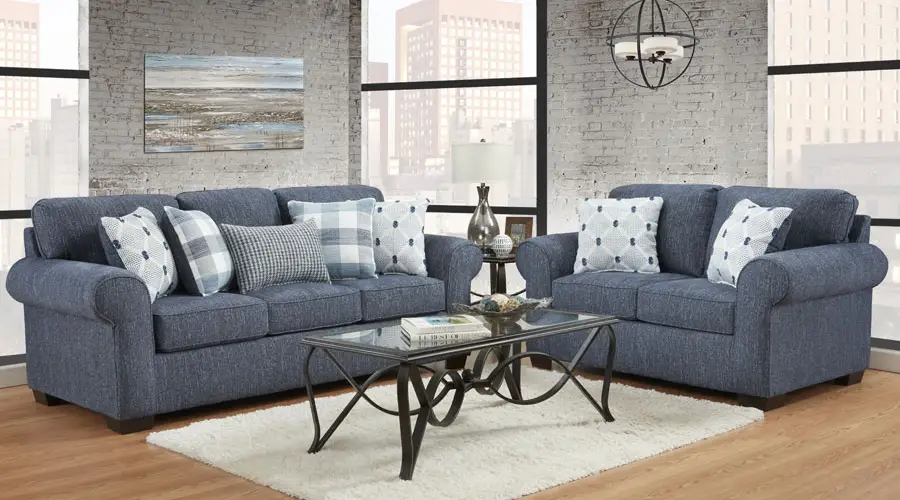
A polished product photo can show color, shape, and style. It cannot show every material inside a table, cabinet, bed, desk, or sofa. It also cannot tell you how the parts are joined, what finish protects the surface, or whether the piece suits the way you live.
That is why the solid wood vs veneer vs MDF vs plywood question has no useful one-word answer. A material name is not a durability rating. It is the start of a better set of questions.
This guide will help you read a furniture specification, compare products on equal terms, and spot details that need clarification before you buy.
Start Here: Material Names Do Not Tell the Whole Quality Story
Furniture works as a complete object. The visible surface matters, but so do the frame, joints, hardware, panels, finish, shelf supports, drawers, cushions, and care requirements.
The Furniture Wiki makes this point clearly for upholstered furniture: a durable cover cannot make up for a weak frame, poor suspension, unsuitable cushions, weak seams, or improper care. The same buying habit is useful when you compare other furniture. Look beyond the headline material and ask how the whole piece is built.
For any item, separate these five questions:
- What do I see and touch? Identify the visible surface and finish.
- What carries the load? Identify the frame, legs, rails, shelf panels, and other structural parts.
- How are the parts connected? Ask about joints, fasteners, hardware, and assembly.
- What conditions will it face? Consider spills, humidity, sunlight, heat, pets, children, and frequent moving.
- What happens after damage? Check the care instructions, warranty, spare parts, and repair options.
If a product page answers only the first question, you do not yet have enough information to judge quality.

Solid Wood, Veneer, MDF, and Plywood at a Glance
Use this table as a specification checklist, not a performance ranking.
| Material label | What the seller should clarify | What to compare before buying |
|---|---|---|
| Solid wood | Wood species, exact components, drying or preparation details, finish, joints, and any non-solid parts | Expected use, surface wear, room conditions, repair options, weight, warranty, and price |
| Wood veneer | Whether the surface is real wood veneer, the core material, exact components, edge treatment, finish, and repair guidance | Surface appearance, edge protection, likely wear points, care, warranty, and price |
| MDF | Exact components, board grade, thickness, finish, edge treatment, fasteners, load limits, and care restrictions | Intended load, exposure to spills or humidity, assembly, moving needs, repair options, and price |
| Plywood | Exact components, panel grade, thickness, face material, core quality, edge treatment, finish, and load limits | Structural role, visible edges, room conditions, hardware, care, warranty, and price |
Notice what the table does not do. It does not crown one winner. Each label covers too many product variations for that. The useful comparison is between two fully specified pieces that will do the same job in your home.
What Is Solid Wood Furniture?
When a product is sold as solid wood furniture, first ask which parts are solid wood. A solid wood top does not tell you what the legs, drawer boxes, back, shelf panels, or internal supports are made from.
Then ask for the wood species and finish. Those details matter before you make claims about denting, movement, cleaning, repair, or price. The available Furniture evidence mentions kiln-dried hardwood in sofa frames and describes pine as more prone to denting than selected alternatives, but that retailer source does not support a rule for every wood species or furniture type.
Use these questions instead of assuming that “solid” means best:
- Which components are solid wood?
- What species is used in each component?
- How was the wood prepared before construction?
- What finish is on the surface?
- What care does that finish require?
- Are small variations in color or grain expected?
- Which damage can be repaired, and who should do the work?
- What does the warranty cover?
Solid wood may be important to you for visual character, material preference, or a specific repair goal. Those are valid reasons to favor it. They still do not replace a full product specification.
What Is Wood Veneer Furniture?
The word “veneer” needs a follow-up question: veneer over what?
A useful description should identify the visible surface, the core beneath it, the parts where that construction is used, and the treatment at exposed edges. It should also separate real wood veneer from laminate, printed foil, or a finish that only imitates wood.
Before judging wood veneer furniture quality, ask:
- Is the visible layer real wood veneer?
- What is the core material?
- Which parts are veneered?
- How are the edges finished?
- What protective finish is applied?
- What cleaning products should be avoided?
- Can surface damage be repaired, and under what limits?
- Does the warranty treat lifting, chipping, staining, and finish damage differently?
Veneer is not proof of low quality. It is also not proof of stability, durability, value, or easy repair. Those conclusions require details about the full construction and the exact use.
What Is MDF Furniture?
An MDF label should lead to questions about component placement, grade, thickness, finish, edges, and hardware. Without those details, you cannot tell what job the panel is expected to perform.
Ask the seller:
- Which components use MDF?
- What board grade and thickness are used?
- Is the surface painted, wrapped, laminated, or veneered?
- How are cut edges and drilled areas finished?
- What fasteners and fittings are used?
- What are the stated shelf or product load limits?
- Are there restrictions for spills, humid rooms, or heat?
- Can the piece be disassembled and moved again?
- What damage is covered by the warranty?
Do not rely on broad claims that MDF is always weak, heavy, cheap, toxic, or moisture-resistant. The current evidence set does not support those statements. Judge the exact board, finish, component, hardware, and use instead.
What Is Plywood Furniture?
“Plywood” is also an incomplete specification. A seller should identify where it is used and provide enough panel detail to support any claim about load, appearance, moisture exposure, or value.
Useful questions include:
- Which components are plywood?
- What are the panel grade and thickness?
- What material is used on the visible face?
- Are exposed edges part of the design or covered?
- What finish protects the face and edges?
- Are voids, repairs, or face variations addressed in the quality standard?
- What load limits apply to shelves, beds, desks, or seating parts?
- Which room conditions and cleaning methods are allowed?
One retailer source in the Furniture Wiki calls “decent plywood” a budget-conscious strength option. That wording is too vague to support a general rule. It does not name a grade, thickness, test method, or furniture application. Treat plywood quality as a product-level question, not a label-level answer.
Which Material Performs Best for Different Furniture Uses?
Start with the job the component must do. Then compare exact specifications from products designed for that job.
Dining Tables and Desks
Ask what forms the top, the edge, the support beneath the top, and the base. Check the stated load, finish care, spill instructions, heat restrictions, and repair policy. A surface material alone cannot tell you whether the whole table suits daily meals, homework, or computer equipment.
Shelving and Cabinets
Ask for shelf thickness, unsupported span, stated load per shelf, back-panel construction, edge treatment, wall-fixing requirements, and hardware. If adjustable shelves matter, ask how the shelf pins and holes are designed for repeated use.
Dressers and Storage Furniture
Look beyond the outer case. Ask about drawer sides, bottoms, backs, runners, stops, handles, joints, and tip-over guidance. A material label on the product title may not describe these working parts.
Bed Frames
Ask which parts form the rails, center support, slats, platform, headboard, and legs. Confirm mattress compatibility, stated load limits, assembly method, required tools, spare hardware, and whether repeated assembly is allowed.
Painted or Curved Furniture
If the design depends on a smooth painted surface or a curved form, ask which material creates that shape and how the surface is finished. Do not assume the visible finish tells you what is underneath.
Mixed-material construction is not a defect by itself. It is not a quality guarantee either. The useful question is whether each material is clearly identified and suited to the job assigned to it.
How Appearance, Durability, Care, and Price Really Compare
Appearance
Compare the actual finish sample, close-up photos, edge details, and real-home customer images when available. Ask whether color and pattern variation are expected. Styled photography may help you judge form, but lighting and editing cannot confirm internal construction or exact color in your room.
Durability
Separate four kinds of performance:
- Surface resistance to daily contact.
- Finish response to spills, cleaning, heat, and sunlight.
- Panel or frame response to load and room conditions.
- Joint and hardware performance during use and moving.
Ask for claims tied to the finished product. A claim about one panel or surface should not be treated as a promise for the whole piece.
Care and Repair
Read the care instructions before buying, not after the first spill. Ask which cleaner is approved, whether standing water must be removed at once, how heat should be handled, and whether a professional is needed for repair.
“Repairable” also needs detail. A light surface mark, damaged finish, chipped edge, loose joint, swollen panel, and broken fitting are different problems. Ask which repairs are possible for the exact product and whether replacement parts are available.
Price
Do not compare price by material name alone. Compare pieces with similar dimensions, functions, hardware, finish, delivery service, assembly needs, warranty, and return terms.
A higher price may reflect design, workmanship, finish, hardware, logistics, brand service, or other factors. It does not prove that every component is better suited to your use. A lower price does not prove poor construction. Request the missing details and compare what you are actually receiving.
How to Check Furniture Quality Before You Buy
On a Product Page
Look for:
- A component-by-component material list.
- Close-up images of surfaces, edges, backs, drawers, shelves, and hardware.
- Assembled dimensions and usable interior dimensions.
- Product weight and stated load limits.
- Finish and care instructions.
- Assembly steps and included hardware.
- Wall-fixing or safety requirements.
- Warranty exclusions.
- Return conditions and packaging requirements.
- Replacement-part information.
If a key detail is absent, ask the seller in writing. Keep the answer with your order record.
In a Showroom
Inspect only what is visible and safe to handle. Open doors and drawers, look at edges and undersides, and check whether the display piece sits level. Ask staff before moving, lifting, or removing any part.
A visual check can reveal questions. It cannot prove composition, material grade, or lifespan. Use the showroom visit to compare the display piece with the written specification, not to replace it.
Before Delivery
Confirm the packaged dimensions, weight, delivery method, assembly level, and access route. Measure doors, hallways, stairs, elevators, and the final room. Material choice will not help if the package cannot reach its destination or the assembled piece does not fit.
Red Flags in Furniture Material Descriptions
Treat vague language as a prompt for clarification. It is not proof of poor quality or bad intent.
Ask for more detail when you see:
- “Wood” without a species, component list, or construction description.
- “Wood finish” without the underlying surface material.
- “Engineered wood” without the panel type, grade, thickness, and component.
- “Premium materials” without named materials and product specifications.
- “Solid wood construction” without a list of solid and non-solid parts.
- “Veneer finish” without clarity on whether the surface is real wood veneer or a decorative imitation.
- “Durable” without a stated use, test, load, care condition, or warranty term.
Marketing language may summarize a product. Your buying decision needs the full version.
A Simple Decision Guide
Use this order when comparing furniture:
- Name the job. What will the piece hold, support, store, or withstand?
- Name the working parts. Which components carry loads or receive daily contact?
- Choose the appearance. Do you want visible natural variation, a consistent surface, a painted finish, or exposed panel edges?
- List the room conditions. Include spills, humidity, sunlight, heat, pets, children, and cleaning frequency.
- Set ownership priorities. Decide how much maintenance, repair, assembly, and moving you are willing to handle.
- Request the specification. Compare the surface, core, frame, edges, finish, joints, hardware, and load limits.
- Compare total value. Review price together with delivery, assembly, care, warranty, returns, and replacement parts.
Only then should the label “solid wood,” “veneer,” “MDF,” or “plywood” influence your choice.
Frequently Asked Questions
Is veneer furniture lower quality than solid wood?
Not by label alone. You need to know the veneer, core, finish, edge treatment, component placement, construction, intended use, and warranty before comparing two pieces.
Is MDF or plywood better for furniture?
There is no supported universal answer. Ask what component the panel forms, what load it carries, how thick it is, how it is finished, what conditions it will face, and what the maker states about care and warranty.
Can veneered furniture be refinished?
The answer depends on the exact surface, its thickness, the finish, the damage, and the proposed repair. Ask the manufacturer or a qualified furniture repair professional before sanding or applying a new product.
Which furniture material handles humidity best?
The material label alone is not enough to answer. Board or wood type, grade, adhesive, exposed edges, finish, joints, room conditions, and care all need to be considered. Follow the product maker’s placement and care instructions.
How can I tell what a furniture piece is made from?
Start with the written material specification. Ask for a component list if the description is broad. Edges, backs, undersides, and unfinished areas may raise useful questions, but appearance alone does not prove composition.
Is mixed-material furniture a sign of poor quality?
No, not by itself. Ask what each material does, how the parts connect, and whether the specifications suit the intended use. Mixed construction should be evaluated, not dismissed or praised automatically.
Choose the Material for the Job, Not the Label
The best furniture material is not a universal winner. It is the material and construction that fit the component, room, daily use, care preference, budget, and repair expectations.
Before buying, save the product page and ask for any missing specification in writing. Compare the visible surface, core, frame, finish, joints, hardware, load limits, care guide, warranty, delivery, and return terms. That checklist tells you far more than a polished photo or a single material claim.