
Buying furniture for a small living room is less about finding the smallest pieces and more about choosing pieces that work together. A compact sofa can still make a room feel cramped if its arms are bulky, the coffee table blocks the route to the door, or a storage cabinet cannot open fully.
Start with the room you have, then compare furniture by real dimensions, daily use, and access needs. This approach gives you a better chance of ordering pieces that fit the room and the way you live.
Start With Measurements, Doorways, and Walkways
Before you browse sofas or storage cabinets, measure the room. Record the clear floor area, wall lengths, windows, radiators, outlets, doors, and anything else that affects where furniture can sit.
Do not stop at the room itself. Measure the front door, apartment entrance, hallway turns, stairs, elevator, and the route to the living room. A piece that fits on a floor plan may still be difficult to deliver.
Create a simple list for every item you are considering:
- Assembled width, depth, and height.
- Seat width and depth for sofas or chairs.
- Total weight, if it affects moving or wall-mounted use.
- Door and drawer opening space.
- Cable access and rear clearance for media furniture.
- Assembly location and the tools or help required.
Then mark the proposed furniture footprint on the floor with painter’s tape or paper. A full-size outline helps you see whether the room still works when someone enters, sits down, opens storage, or walks through with a bag.
Choose the Right Sofa Size and Shape
The sofa usually sets the scale of a small living room, so choose it before smaller pieces. Start with its full footprint, not only the number of seats shown in a product title.
Look at the complete specification: outside width, depth, back height, seat dimensions, arm thickness, and leg position. Two sofas with the same seat count can take up very different amounts of room.
Match the sofa to your real routine
Ask what the sofa needs to do on an ordinary week.
- If it is your main place to relax, compare seat depth, back support, and the number of people who use it at once.
- If children or pets use it often, read the fabric composition, care code, abrasion-test information, cushion details, and frame description.
- If it is occasional seating, a smaller profile may leave more room for a reading chair, storage, or a clear walking route.
Fabric alone does not determine how well a sofa will hold up. The cover, frame, cushion construction, seams, care method, sunlight exposure, and household use all matter. Read the care label before assuming a fabric will be easy to clean.
Avoid choosing a sofa only from a styled photo. Check the assembled dimensions and review customer images when available. If the seller provides a room-planning tool or a full-scale product template, use it before ordering.
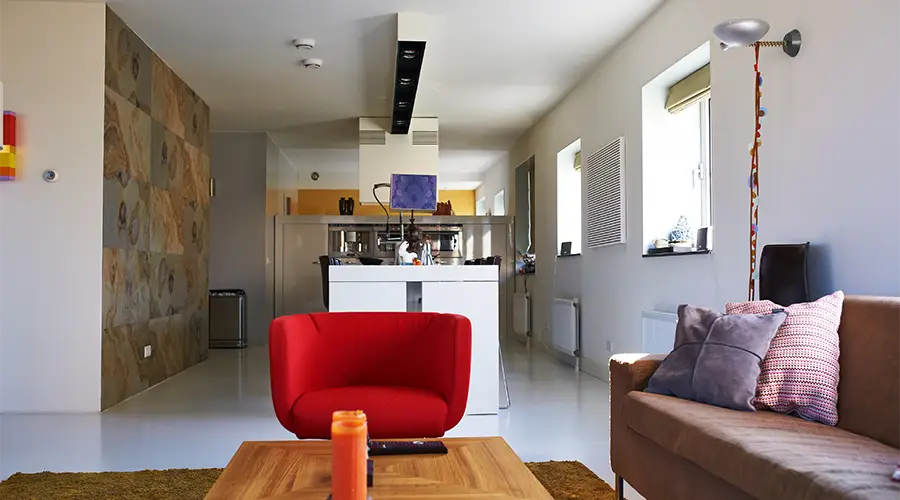
Use Coffee Tables and TV Stands Without Blocking Movement
Coffee tables and TV stands often look secondary, but they can make a small room much harder to use when their footprint is not planned early.
For a coffee table, check more than its top surface. Think about where people put their feet, where they enter the seating area, and whether the table will interfere with storage doors, a balcony door, or a route through the room. If you need a table for drinks and remotes but not every day, a smaller movable table may suit your routine better than a large fixed piece.
For a TV stand or media console, compare:
- Outside width, depth, and height.
- Interior shelf or drawer dimensions.
- Door and drawer opening direction.
- Ventilation and cable access.
- Whether the TV base fits the usable top surface.
- The space needed behind the unit for plugs and cables.
Do not rely on a generic spacing rule. Product depths, door swings, room shape, and how people move through the space vary too much. Use your floor outline to test the actual piece you are considering.
Add Storage Furniture That Does Not Overcrowd the Room
Storage helps only when it solves a real problem. Start by listing what needs a home: blankets, games, chargers, books, toys, pet supplies, or media equipment. Then compare the usable storage space with the furniture’s outside footprint.
A large cabinet may offer plenty of storage but take up more floor area than the items justify. A smaller unit with accessible drawers may be more useful if it holds the things you reach for every day.
Before buying storage furniture, check:
- Interior drawer, shelf, or compartment dimensions.
- Whether doors, drawers, or lift-up lids need open floor space.
- The weight the shelves or drawers are designed to hold, when stated.
- Access to the items you use most often.
- How the finish and care requirements fit your household.
Multi-function furniture can be useful, but it is not automatically a space saver. A storage ottoman, lift-top table, or sofa with built-in storage still needs room to open and be used comfortably. Test its operating footprint in your layout plan.
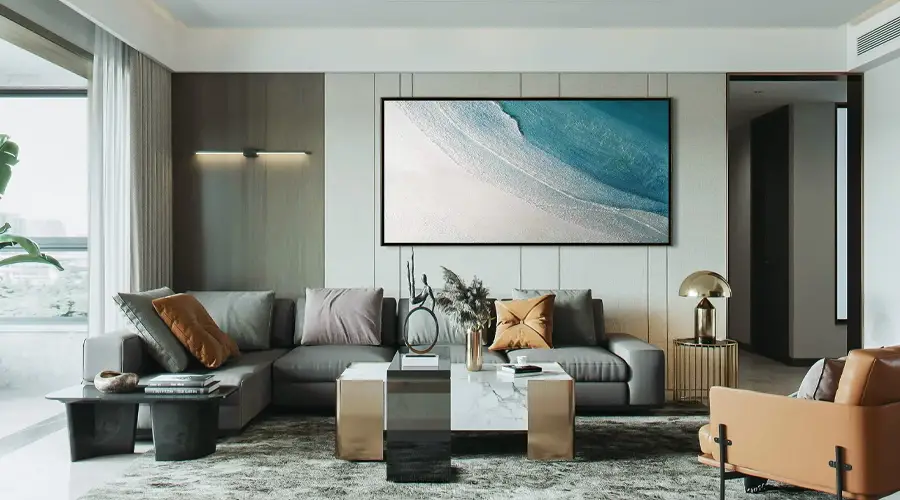
Make Furniture Look Lighter With Scale, Legs, and Layout
Visual weight is personal. A piece may look light in a product photo but feel dominant once it sits beside your rug, curtains, flooring, and wall colour. Treat photos as a starting point, not proof that the piece will suit your room.
Compare product images with the full measurements, material description, colour, and finish. Review them in the same type of lighting you have at home when possible. A tape outline or paper template can also show whether a tall cabinet, deep sofa, or wide media unit will dominate the wall.
Instead of following a fixed style rule, build a simple hierarchy:
- Choose the main piece that the room needs most, usually the sofa.
- Reserve the routes people use every day.
- Add the storage that solves a specific problem.
- Add tables, chairs, lamps, and decor only after the core layout works.
This order helps you avoid filling the room with individual pieces that look good on their own but compete once they arrive together.
A Small Living Room Furniture Checklist Before You Buy
Use this checklist before placing an order:
- [ ] I measured the usable room area and fixed obstacles.
- [ ] I measured the delivery route, including doors, hallways, stairs, and elevators.
- [ ] I compared the furniture’s assembled dimensions with a full-size floor outline.
- [ ] I checked usable dimensions, not only outside dimensions.
- [ ] I allowed for drawer, door, lid, and cable access.
- [ ] I checked sofa fabric, care information, frame details, and cushion information for my household.
- [ ] I confirmed the assembly level, delivery method, return conditions, and warranty for the exact product.
- [ ] I chose storage based on the items I need to store and the space needed to access them.
Frequently Asked Questions
What furniture should I buy first for a small living room?
Start with the piece that supports the room’s main use. For most living rooms, that is the sofa. Once you know its real footprint and location, it is easier to select tables, media furniture, and storage that fit around it.
How do I know if a sofa will fit through my door?
Compare the sofa’s packed and assembled dimensions with every point on the delivery route. Check door openings, hallways, turns, stairs, elevators, and the room entrance. Contact the seller if the product page does not explain how the item is delivered or assembled.
Is storage furniture always a good choice in a small room?
No. It helps when it stores items you use and can be opened without interrupting the room. Compare its usable storage with its outside footprint and required access space before buying.
Plan the Room Before You Order
A small living room can work well when each piece has a clear purpose. Measure first, choose the sofa from its real dimensions and daily use, then add secondary furniture only when the layout still feels easy to move through.
Before you buy, review the exact product page for assembled size, usable storage, materials, care, delivery, assembly, returns, and warranty. That final check is often what prevents an attractive online choice from becoming an awkward fit at home.